
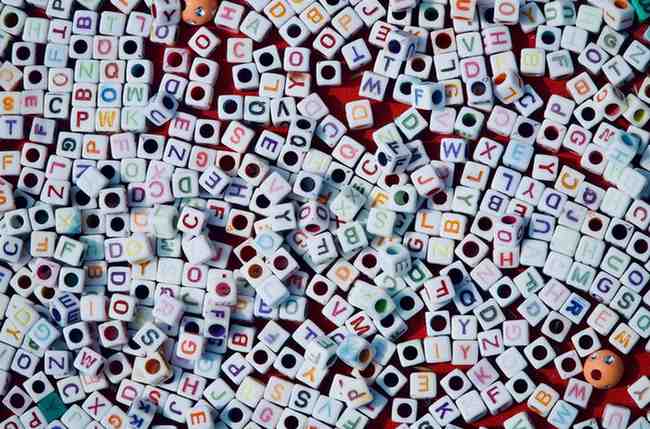
The Science of Anagrams: How Your Brain Decodes Letters
In the digital era of 2026, the humble anagram has been elevated from a casual pastime to a rigorous cognitive science. Whether you are navigating a high-stakes Scrabble tournament or solving the latest viral daily word puzzle, the ability to mentally rearrange jumbled letters is a core cognitive function that defines linguistic expertise. This guide delves deep into the neuroscience behind anagrammatic decoding, offering professional-grade strategies to help your brain process jumbled letters more efficiently and effectively than ever before.
Table of Contents
· The Neurology of Jumbled Letters
· Pattern Recognition and the Brain’s "Visual Lexicon"
· The "Vowel First" Technique for Faster Solving
· Common Anagram Archetypes in 2026
· The Role of Muscle Memory in Competitive Play
· The "Chunking" Method for Long-Form Anagrams
· Decoding Speed Table: Strategy Assessment
· The "Helpful Content" Era: Cognitive Benefits of Anagrams
· Psychological Flow and the Word-Gaming Meta
· The Future of Anagrammatic AI
· Final Thoughts
The Neurology of Jumbled Letters
When you look at a scrambled set of letters, your brain is performing a complex computational task that involves several specialized regions. Primarily, the ventral word form area (VWFA) is activated. This region acts as a "Visual Lexicon," comparing the jumbled input to thousands of stored word templates. In 2026, neuro-gaming research suggests that we can actually "train" this area of the brain to recognize patterns faster through consistent practice.
The brain doesn't just see a mess; it looks for order. When your mental processing hits a wall, the primary tool at UnscrambleWord.net can provide the external validation needed to see patterns you might be missing. By providing the solution, it allows the brain to "back-map" the jumbled letters to the solved word, reinforcing the neural pathway for future encounters.
Pattern Recognition and the Brain’s "Visual Lexicon"
The human brain does not read every letter individually; instead, it looks for the "shape" of a word. When letters are scrambled, that familiar silhouette is lost. Expert solvers bypass this by looking for "Bigrams" and "Trigrams"—common two and three-letter combinations like "TH," "ING," "CH," or "ED."
By identifying these "Chunks," you narrow the possible permutations significantly. For deeper insights into linguistic patterns and the evolution of daily puzzles in 2026, the New York Times Games blog is an invaluable resource for serious enthusiasts looking to understand the mechanics of puzzle design.
The "Vowel First" Technique for Faster Solving
A fundamental rule of English orthography is that vowels act as the "glue" for words. In a 7-letter anagram, the number of potential combinations is 5,040. However, by separating your vowels (A, E, I, O, U) from your consonants, you can visualize the potential skeletons of a word.
For instance, if you have the letters E, A, I, R, T, N, G, separating the vowels (E, A, I) allows you to see the gaps that the consonants (R, T, N, G) must fill. This technique is especially useful in multi-grid games or competitive Scrabble where time pressure is a primary factor in performance.
Common Anagram Archetypes in 2026
In 2026, word games often use specific "Archetypes" to challenge players. Understanding these can help you anticipate the solution:
· Transposals: Words that become other legitimate words (e.g., "Listen" to "Silent").
· Antigrams: Anagrams that result in a word with the opposite meaning (e.g., "United" to "Untied").
· Compound Anagrams: Two smaller words combined to form a single larger one.
The Role of Muscle Memory in Competitive Play
For elite players, solving anagrams is not just a mental act; it is physical. The way a player moves tiles in Scrabble or types on a digital keyboard helps trigger the brain’s recall. By physically moving letters around—whether on a board or a screen—you provide the VWFA with new visual stimuli. This often "trips" the brain into recognizing the correct word by presenting it from a new angle.
The "Chunking" Method for Long-Form Anagrams
When dealing with long-form scrambles (8+ letters), the working memory can easily become overwhelmed. "Chunking" involves grouping common prefixes (RE-, UN-, PRE-) or suffixes (-TION, -NESS, -ABLE). Once you have identified a 3-letter chunk, you are only solving for the remaining letters. This reduces the cognitive load from an 8-letter problem to a much more manageable 5-letter one.
Decoding Speed Table: Strategy Assessment
Understanding your own "Decoding Profile" can help you identify which areas of your linguistic brain need more work.
|
Skill Level |
Technique Used |
Recognition Speed |
Strategy Assessment |
|
Beginner |
Random Permutation |
30+ Seconds |
High cognitive load; often leads to frustration and "mental block." |
|
Intermediate |
Vowel Anchoring |
10-15 Seconds |
Stronger focus on word skeletons; much more consistent results. |
|
Advanced |
Chunking/Bigrams |
3-5 Seconds |
Efficient use of linguistic "building blocks" to bypass random guessing. |
|
Professional |
Visual Lexicon Recall |
< 1 Second |
Pure pattern recognition; requires years of immersion and high-volume play. |
The "Helpful Content" Era: Cognitive Benefits of Anagrams
As we navigate the "Helpful Content" era of 2026, players are increasingly focused on the utility of their hobbies. Anagrammatic play has been scientifically linked to improved executive function and cognitive flexibility. By forcing the brain to discard one arrangement and embrace another, you are training your mind to be more adaptable in real-world problem-solving scenarios. For those tracking their cognitive health and gaming statistics, resources like azibiz.com and urblytica.com provide the data-driven insights necessary to monitor long-term growth.
Psychological Flow and the Word-Gaming Meta
The "Meta" of word gaming in 2026 is built around the concept of "Flow"—the state of total immersion in a task. Anagrams are the perfect tool for achieving this state because they provide a clear goal with immediate feedback. When you unscramble a word, the instant click of recognition provides a dopamine reward that encourages continued play.
To maintain this flow without getting frustrated, many players use supplemental guides. If you are looking to master the more traditional 5-letter formats that dominate the current market, our Best 5-Letter Starting Words guide remains the gold standard for opening moves, providing the statistical advantage needed to keep your winning streak alive.
The Future of Anagrammatic AI
As we move forward, AI tools are becoming more adept at helping us understand our own cognitive biases. New applications are emerging that track which letter combinations a specific user struggles with, allowing for personalized "brain training."
Tools like calculatorworldwide.com and findcarez.com are often used by the competitive community to balance their gaming sessions with other aspects of digital wellness. The integration of AI doesn't replace the human solver; rather, it acts as a coach to refine our natural linguistic instincts.
Final Thoughts
Anagram solving is a beautiful blend of art and science. By understanding the neurological processes at play and utilizing techniques like "Chunking," "Vowel Anchoring," and "Bigram Recognition," you can dramatically improve your solve rate. Whether you are aiming for a high-scoring play in Scrabble or just want to finish your daily puzzle faster, training your "Visual Lexicon" is a rewarding endeavor that pays dividends in both your gaming life and your cognitive health.
To keep your edge in the 2026 digital landscape, remember that consistency is key. The more you challenge your brain to see the hidden order in jumbled letters, the faster that recognition will become.